Daor-chleachdadh

Dè a’ Ghàidhlig a chuireamaid air ‘exploitation’ anns an t-seagh shònraichte a’ ciallachadh a bhith a’ cleachdadh cuideigin no rudeigin ann an dòigh mhì-chothromach no neo-bheusach, mar a mhìnich an OED:

“The action or fact of taking advantage of something or someone in an unfair or unethical manner.”

Tha e coltach gu bheil a’ chiall àicheil dhen fhacal seo reusanta ùr agus gun deach a chleachdadh anns an t-seagh seo sa Bheurla a’ chiad uair anns na 1830an ann an iomradh air an sgrìobhadh aig an t-sòisealach thràth Saint-Simon.

’S e bun-bheachd ro chudromach a th’ ann, ach cha chreid mi gu bheil deagh fhacal Gàidhlig againn fhathast a tha ga riochdachadh gu ceart.

Tha ‘dúshaothrú’ aig na h-Èireannaich, ach chan eil fios agam an cleachdar ‘saothair’ ann an dòigh aisigeach ro thric air an taobh againne de Shruth na Maoile. Cuideachd, tha an ro-leasachan ’dú-‘ (dubh-) caran farsaing. Bu toil leam rudeigin nas mionaidich.

Mar sin, tha mi a’ dol a dh’fheuchainn ‘daor-chleachdadh’. Tha mi a’ faireachdainn, ann an co-theagsa, gum bi ciall a’ bhriathair seo reusanta trìd-shoilleir. Tha mi a’ moladh ‘daor-’ anns an t-seann seagh ‘unfree, servile, laborious’ (faicibh ‘doír’ ann an eDIL). Gheibhear an ro-leasaichean seo anns na faclan ‘daor-mhaighstir’ (oppressor), ’daor-ghille’ (slave), agus ‘daor-thaigh’ (prison).

Is toil leam e, ach dè ur beachdan-se?

Dealbh: Coalbrookdale by Night, Philip James de Loutherbourg, 1801

Air a phostadh ann an corpas ficsean-saidheans | Air a thagadh , , , | 2 beachd(an)

Cass Ezeji aig Leabharlann Irise Ghlaschu

Bidh mo charaid, Cass Ezeji, a’ cumail dà bhùth-obrach an ath mhìos aig Leabhrlann Irise Ghlaschu air a’ chuspair, Fèin-aithne nan Afro-Gàidheal, Cò Sinn? Anns an dàrna bùth-obrach, bidh cothrom aig freastalaichean iriseagan a dhèanamh. Tha coltas fior inninneach air an iomart seo, agus tha mi a’ guidhe gach soirbheas dhi. Tha na bùithtean-obrach seo fosgailte do dhaoine de dhath (BIPOC/BAME), agus gheibhear tiogaidean dhan dà thachartas an seo agus an seo.

Air a phostadh ann an naidheachd | Air a thagadh , , | Sgrìobh beachd

Tùr Innealta

Ciamar a chanar artificial intelligence anns a’ Ghàidhlig?

Nuair a thig teicneòlas ùr sam bith am bàrr, daonnan ’s e ceist a th’ ann—anns a h-uile cànan ach a’ Bheurla mar as tric—dè briathar ùr a chleachdar air an teicneòlas sin? An dèan sinn tar-litreachadh air an ainm Bheurla mar a rinnear le ‘fòn’, an cruthaich sin briathar ùr freumhaichte anns a’ Ghàidhlig mar a rinneadh le ‘eadar-lìon’, no an dèan sinn rudeigin eadar a dhà mar a rinneadh leis a’ bhriathar ‘teicneòlas’ fhèin?

Tha a’ cheist seo na cùram don chuid a sgrìobhas ficsean saidheans gun teagamh, ach cuideachd, ’s e tè a bheir buaidh air an dòigh anns am bruidhinn sinn mu theicneòlas anns na naidheachdan agus air an dòigh anns an tèid saidheans agus teicneòlas a theagasg anns na sgoiltean. Agus dh’fhaodadh i a bhith connspaideach cuideachd aig amannan, le diofar bheachdan aig diofar dhaoine air an fhreagairt a b’ fheàrr dhi.

A thaobh artificial intelligence, tha mi air ‘tuigse innealta’, ‘tuigse innleachdail’, ‘faisneis fuadain’, agus ‘inntinn fuadain’ fhaicinn, ged nach eil gin dhiubh stèidhichte fhathast, chanainn. ’S e an cleachdadh as cumanta air fad ann an sgrìobhadh Gàidhlig, ach cuideachd ann an labhairt, bhite an dùil, gun cleachdar an acronaim ‘AI’ air iasad bhon Bheurla, agus tha sin nàdarra gu leòr, ach dè ma tha sinn ag iarraidh an abairt shlàn a chleachdadh? Dè bhiodh ciallach anns a’ Ghàidhlig an uair sin?

Mar a chithear bhon thiotal, b’ fheàrr leamsa ‘tùr innealta’, agus bu toil leam mìneachadh carson.

A’ tòiseachadh le artificial, agus a-mach à ‘fuadain’, ‘brèige’ agus ‘innealta’ mar eadar-theangachaidhean, saoilidh mi gur e ‘innealta’ am briathar as iomchaidh anns a’ cho-theacsa seo. Tha blas rudeigin breitheach, àicheil air na faclan ‘fuadain’ is ‘brèige’, coltach ri fake sa Bheurla. Tha ‘innealta’ nas neodraich, chanainn, a’ riochdachadh rudeigin a chaidh a chruthachadh le innleachdan daonna seach gnìomhan nàdarra.

Tha an t-eadar-theangachadh air intelligence nas dorra gu cinnteach. Tha iomadh briathar Gàidhlig mun cuairt air a’ bhun-bheachd a tha ga riochdachadh an seo le intelligence sa Bheurla: ‘tuigse’, ‘gliocas’, ‘inntinn’, ‘tulchuis’, ‘ciall’, ‘aigne’, ‘mothachadh’ uile nam measg. Ach dhòmhsa dheth, co-dhiù, ’s e ‘tùr’ am briathar as fhaisge air intelligence anns an t-seagh ‘comas-smaoineachaidh’’, mar a thèid ciallachadh nuair a thathas a-mach air ‘AI’.

Chan e facal uamhasach cumanta a th’ ann an ‘tùr’ anns an t-seagh seo, ach chan eil e uile gu lèir à cleachdadh fhathast nas mò, gu h-àraidh anns an abairt ‘gun tùr’, agus tha am buadhair stèidhichte air, ‘tùrail’, reusanta bitheanta, cuideachd. Agus saoilidh mi gu bheil e nas fheàrr a bhith a’ tarraing air faclan nach eil ro chumanta nuair a nithear briathran no abairtean ùra mar seo gus “semantic overload” a sheachnadh, mar a theireadh Wilson McLeod ris, .i. a’ cur cus chiallan air àireimh bhig de bhriathran làitheil, rud a gheibhear nan cleachdte ‘tuigse’ an seo, tha mi a’ creidsinn.

Mar sin, bidh mi a’ cleachdadh ‘tùr innealta’ anns an ath nobhail agam. Tha mi air fàs cleachdte ris, agus tha e a’ còrdadh rium, ach sin mise. Saoil, dè ur beachd-se? Dè mholadh sibhse?

Air a phostadh ann an corpas ficsean-saidheans | Air a thagadh , , , | 5 beachd(an)

Coimheagar

Chan eil diù a’ choin agam do glainead na Gàidhlig. Bidh cànanan daonnan a’ gabhail iasad air faclan is abairtean bho chànanan eile. ’S e gnìomh cudromach, àbhaisteach a th’ ann ann am mion-fhàs cànain sam bith. ’S mar sin, nuair a thig e gu bruidhinn anns a’ Ghàidhlig mu rian de rudan a tha ag obair ri chèile, coltach ris a h-uile duine eile, cleachdaidh mi am facal-iasaid siostam, agus gur math a fhreagras e.

Ach an latha eile, thàinig mi tarsaing air facal ùr ann an Dwelly a’ riochdachadh an aon bhun-bheachd: comh-eagar, agus thaitinn e leam cho mòr, saoilidh mi gun tòisich mi a chleachdadh an àite siostam, aig amannan co-dhiù. Is toil leam comh-eagar air sàillibh ’s gu bheil ciall an fhacail cho follaiseach bho chiall an dà eileamaid dheth: rudan air an eagrachadh ri chèile, .i. siostam.

Chan e facal cumanta a th’ ann, gun teagamh. Cha do lorg mi aon iomradh air ann an DASG. Ach tha e reusanta cumanta ann an Gàidhlig na h-Èireann, a’ ciallachadh co-òrdanachadh an sin. An aon rud, ge-tà: nuair a chanas mi fhìn e, gu nàdarra, bidh mi a’ cur a’ bheuma air a’ chiad lide. Chan eil fhios agam a bheil sin traidiseanta gus nach eil, ach tha e a’ faireachdainn ceart, agus mar sin, nuair a chleachdas mi ann sgrìobhadh e, saoilidh mi gun litrich mi mar aon fhacal e: coimheagar.

Dè ur beachd?

Air a phostadh ann an corpas ficsean-saidheans | 1 bheachd

Lèirmheas: Dune 2

Choimhead mi Dune 2 a’ chiad uair air an sgàilean mhòr aig a’ Highland Cinema anns a’ Ghearasdan na bu tràithe am bliadhna, agus nuair a thàinig mi a-mach às an taigh-dheilbh, bha mi air chrith. Cha chreid mi gun tug film eile an aon bhuaidh orm on a chunnaic mi a’ chiad Star Wars anns an taigh-dheilbh is mi nam bhalach bheag air ais an 1977. Cheannaich mi an DVD, agus choimhead mi a-rithist e thar an deiridh-sheachdain corra thuras, agus ged nach robh an aon bhuaidh aige air an sgàilean bheag, bha e fhathast uabhasach math.

Tha fios gun robh mòran iomagaineach, agus ’s e faochadh a th’ ann gu bheil e cho math ’s a tha e. Bha an leabhar cianail cudromach dhomh nuair a bha mi òg, agus easbhaidhean an dàrna taobh, tha mi cuideachd measail air a’ film aig David Lynch. Bha a’ chiad film anns an t-sreath ùr seo glè mhath, ach bha fios gum biodh an dùbhlan a bu mhotha ri thighinn anns an dàrna fear. An soirbhicheadh le Denis Villeneuve far nach do shoirbhich le Lynch no Alejandro Jodorowsky roimhe?

Ann am meadhan nan seachdadan, nuair nach deach e le Jodorowsky, dh’fhalbh George Lucas, agus rinn e Star Wars, a bha, gu h-ìre mhòr, na thionndadh faoin ach spòrsail air an sgeulachd aig Frank Herbert, agus leis an fhìrinn innse, is dòcha gum b’ e deagh rud a bha sin. B’ e film às na 70an a bh’ ann an Star Wars gu a chùl. Cha chreid mi gum freagradh an Dune aig Villeneuve air an linn sin, ach tha e a’ faireachdainn buileach iomchaidh dhan linn againne, le a chnuasachadh air cumhachd agus air a’ chunnart an cois ceannardais mhesiasaich.

’S e film dorcha gun dòchas a th’ ann, agus ’s ann mar sin a lorg mi an nobhail nuair a bha mi òg. Tha an saoghal aig Dune uile gu lèir Machiavellianach. ’S e deachdairean geur-chùiseach a th’ ann an teaghlach Paul Atreides, dìreach rud beag nas sìobhalta na an teaghlach Harkonnen, ach iad nan deachdairean fhathast. Agus còmhla ris na Bene Gesserit, an Spacing Guild, an t-Iompaire fhèin: tha iad uile a’ cluich an aon gheama chumhachd, geama gun iochd. “This world is beyond cruelty,” mar a chanas Paul anns a’ film, agus tuigear gu bheil e a-mach air an t-saoghal aige air fad, chan ann a-mhàin air Dune fhèin.

Tha Dune 2 dìleas dhan lèirsinn dorcha a thug buaidh cho làidir orm nuair a bha mi nam bhalach, agus nach do bhris e mo chridhe a-rithist, ceathrad ’s a chòig bhliadhna air adhart, air latha dorcha, fliuch, ann am baile beag, glas, fada on bhaile mhòr, uaine, làn dòchais far an d’fhuair mi m’ àrach òg.

Air a phostadh ann an Ficsean-saidheans | Air a thagadh , , , , , , | Sgrìobh beachd

The Death Discourse is a Dead End

The fear that Gaelic is dying is nothing new. Folk have been warning that Gaelic could be dead ‘in ten years time’ since at least the 1980s, and folk have been agonizing about the imminent death of the language for much longer than that, but while not new, I would argue that this death discourse is potentially self-sabotaging and damaging to our language-revival movement.

Successful language revivals are, first and foremost, vibrant social movements, so as activists, we want to frame our revival in a way that inspires folk to get involved, but as with any social movement, it is not aways easy to know the best way to do this. For example, there has been quite a bit of public debate recently, and a fair amount of research, on this question with regards to climate change. Should we frame climate change as an existential crisis (so called ‘emergency framing’) or would more positive, hopeful framing be more effective for motivating folk to take action?

The truth is we don’t know. The results of the best current research are mixed, but there is some data to indicate that emergency framing can, in some situations, be less effective than more positive messaging, and while this question has not been specifically studied in the Gaelic context at all yet, I would argue there are good reasons to be at least concerned that emergency framing might also serve to put off folk from getting involved in our language revival.

For instance, concider how parents might repond to the death discourse. Would parents be more or less likely to speak Gaelic with their children or to enrol their children in Gaelic-medium education if they think that the language is failing? Quite rightly, parents want to give their children the skills they will need to succeed in life, but the death discourse gives the opposite impression of the language: it gives the impression that Gaelic is increasingly useless.

Or consider how politicians might interpret this discourse. As Gaelic activists, we are a very small group. Depending how you define a ‘Gaelic activist’, there are a few dozen of us, or maybe a few hundred at most, so we don’t constitute a meaningful voting block by ourselves. To rally politicians to our cause, we have to convince them that our enthusiasm for Gaelic is shared by a significant percentage of the general public, but the death discourse, again, gives the opposite impression. From the perspective of politicians, it might appear politically naive, and possibly even undemocratic, to continue to dedicate public resources to a language that their own constituents appear to be abandoning.

Yes, Gaelic is a threatened language, and I am not arguing that we should lie to people, but I am arguing that we should tell a different story: a more hopeful and better balanced story, and thereby, a more accurate one. Any language revival is a mixture of good and bad news, and while we have to be mindful of where we need to do more work, focussing almost exclusively on our fear that Gaelic will soon be dead actually misrepresents the situation. It may feel cool-headed, clear-eyed and realistic to some activists, but in reality, it is none of these things.

The problem with emergency framing in this respect is that it is both too optimistic and too pessimistic at the same time. It is too optimistic because it asserts that there is still a vernacular language left to ’save’, but as I have argued before, that horse bolted in the 1960s and 1970s, and there is no real prospect of reviving Gaelic as the principal vernacular language in the Islands or anywhere else in Scotland in either the short or medium term.

But also, emergency framing is too pessimistic because it asserts that Gaelic dying, when the truth is that, by many measures, Gaelic has never been more popular in Scotland. There is exactly zero chance that Gaelic will die out as an everyday spoken language in the Islands or in Scotland in general in any of our lifetimes. Gaelic is changing—has changed—from a language spoken in territorial speech communities to one spoken in language networks, but it has not died. Engaged scholarship and effective advocacy alike should be about helping the Gaelic-speaking world to understand this change and figure out how to make it work.

There is a persistent belief, though, shared by many Gaelic activists and even some scholars, that territorial speech communities are the sin qua non of living languages, but if we want to strengthen Gaelic as a vital, widely-spoken language into the 21st century, we have to work with Gaelic as it is in the real world, not as we wish it was. We have to work with those who are actually interested in learning, using and passing on the language, not force our revivalist aspirations on individuals or communities because we believe they should save their language.

In 1998-99, as part of his PhD research, Alasdair MacCaluim conducted a detailed survey of 643 learners and new speakers of Scottish Gaelic. One of the questions he asked was to what degree they either agreed or disagreed with the following statement: “Gaelic can only be saved if Gaelic speaking communities continue to exist in the Islands”, and he found that a clear majority of respondents, 67.6%, either agreed or strongly agreed with this assessment. (p. 264)

And this is, I think, the heart of the problem. Many Gaelic speakers, including many learners and new speakers, need Gaelic to exist in the Islands as a common vernacular to satisfy their own understanding of Gaelic as a real, living language, but folk on the Islands were not put on this planet to serve as a means to someone else’s ends. They will make their own decisions, and the reality is that, to date, a significant proportion of Islanders have decided that they are not particularly interested in the Gaelic revival, at least for now.

There are, of course, plenty of folk living in the Highlands and Islands of Scotland who are passionate about Gaelic, who want to learn, use and pass it on, and they should be unstintingly supported, but there is also huge interest in learning and using Gaelic throughout Scotland, and if all these interested folk, wherever they may be, could be helped to become active Gaelic speakers, Gaelic’s future in Scotland would be really bright.

There is no limit to what we can achieve; we just have to fight together for the structures (and money) required to turn interest into ability and then ability into use, but to do this, to build the kind of vibrant, optimistic social movement that could successfully pressure the government to genuinely support the Gaelic revival, I believe we need to tell a different story.


Post script: here are a few examples of some Gaelic developments that are making me feel optimistic just now:

Cnoc Soilleir, South Uist – Cnoc Soilleir is an inspiration. Local grassroots activists created a centre that should serve as an exemplary model for community-based language and cultural development throughout Scotland and around the world.

Cultarlann, Inverness – Another amazing grass-roots-built Gaelic cultural centre, this one in an urban setting.

Gaelic in Sleat – Several generations of Gaelic activists have built a level of institutional support for the language in Sleat that actually appears to be delivering a real, measurable revival. The recent census results here are very encouraging.

Gaelic numbers in Scotland as a whole – Some may talk these numbers down, and it is true that we don’t yet know who these new speakers are or what sort of Gaelic they can speak, but the fact that 12 thousand more people rated their own Gaelic abilities or those of their children highly enough that they were willing to record themselves or their children as Gaelic speakers is unquestionably significant positive news.

Ionad Gàidhlig Dhùn Èideann – Edinburgh Gaels are nothing if not persistent. It took Gaelic activists in the capital 13 years to win a Gaelic primary school, and they are still fighting the council for a Gaelic high school. It is taking them even longer to win the battle for a Gaelic centre in the city, but I wouldn’t bet against them.


“Gaelic could ’die’ in ten years.” The Scotsman, 7 December, 1983, p 7.

MacCaluim, Alasdair. (2002) Periphery of the periphery? Adult learners of Scottish Gaelic and reversal of language shift. PhD thesis, University of Edinburgh.

By analysing Gaelic poetry, Wilson McLeod shows how Gaels were concerned about the possible death of the language as early as the late 18th century: McLeod, Wilson (2003) “Language Politics and Language Consciousness in Scottish Gaelic Poetry.” Scottish Gaelic Studies 21: 91–146.

For a good review of the many questions and uncertainties around ‘emergency frames’ see: James Patterson, Carina Wyborn, Linda Westman, Marie Claire Brisbois, Manjana Milkoreit and Dhanasree Jayaram (2021) ‘The political effects of emergency frames in sustainability.’ Nature Sustainability 4, 841–850.

For an interesting recent article empirically looking at this question see: Marjolaine Martel-Morin and Erick Lachapelle (2022) ‘Code red for humanity or time for broad collective action? Exploring the role of positive and negative messaging in (de)motivating climate action.’ Frontiers in Communication 7.

For a scholarly critique of the death discourse in the Scottish Gaelic context, see: MacEwan-Fujita, Emily (2006) “Gaelic Doomed as Speakers Die Out?: The Public Discourse of Gaelic Language Death in Scotland.” In Wilson McLeod (ed), Revitalising Gaelic in Scotland: Policy, Planning and Public Discourse. Edinburgh: Dunedin Academic Press, 279-293.

And for a scholarly critique from a North-American perspective, see: Davis, Jenny. (2017) “Resisting rhetorics of language endangerment: Reclamation through Indigenous language survivance.”, Language Documentation and Description 14, 37-58. Thank you to Prof Martin Kohlberger for drawing my attention to this article.

Photo: Diego Delso, delso.photo, License CC-BY-SA

Air a phostadh ann an Uncategorized | Air a thagadh , , , , | Sgrìobh beachd

Consultation on the Scottish Languages Bill

Below is my personal response to the consultation on the Scottish Languages Bill. If you haven’t submitted your own response yet, there is still time! The consultation closes on Friday, and you can find the forms here in English and in Gaelic.

Distinguished members of the Education, Children and Young People Committee,

Thank you for the opportunity to comment on the current draft of the Scottish Languages Bill. While there is much to recommend in the current draft, I would like to focus on one critical weakness I see in the bill as it stands, and that is that the draft legislation establishes no new language rights for Gaelic or Scots speakers, and specifically, no parental right to Gaelic medium education (GME).

Gaelic is in an enigmatic position in Scotland at this point in its history. In some respects, the language has never been more popular. When asked in Scottish Social Attitudes Survey, 90% of young adults said that Gaelic is an important part of Scotland’s cultural heritage and 59% of young adults said that they would like to speak better Gaelic. With this kind of support, Gaelic should be in rude health, but it is also true that public provision of Gaelic adult and childhood education lags far behind this demand, with less than 2% of Scots reporting any ability in the language in the last census and only 1% of Scottish primary students enrolled in GME.

The provision gap in GME is particularly damaging. While research shows that GME is very attractive to parents throughout Scotland, with 28% of adults reporting that they would consider GME for their children if offered in their area, GME is still only available in 3.1% of Scottish primary schools. Given this demand, and after 40 years of pressure from parents and other activists, provision should be much more widespread than it is now, but the growth of GME has been consistently blocked by councils around the country and hindered by a lack of a clear parental right to GME for their children.

A right to GME was a central demand of the campaign for secure status for Gaelic in the 1990s, a campaign that culminated in the Gaelic Language (Scotland) Act 2005, but when the final act was passed, to the great disappointment of Gaelic activists and parents, no such right was included. Indeed, the act was so weak that it did not contain any substantive language rights at all. As a result, parents and other Gaelic activists have been left to fight long and exhausting political campaigns to force councils to open Gaelic units and schools again and again for decades. The Education (Scotland) Act 2016 only further enshrined this broken process in law.

A parental right to GME is practical and achievable in a country as wealthy as the Scotland. Of course, such a right would require rapidly growing the supply of Gaelic-medium teachers, but with sufficient political will, this is entirely possible. For example, in the Basque Autonomous Community (BAC) in Spain, a region with a similar per capita GDP to Scotland, through a generous program of language-learning bursaries and sabbaticals, authorities increased the supply of teachers qualified in the Basque language from around 5% to almost 90% in less than 30 years.

As the statistics above show, Gaelic’s support in Scotland is far broader than its small number of speakers might suggest. With the proper educational provision, Gaelic has the potential to grow to be a widely-spoken language again in Scotland, but that provision will only materialize if Gaelic speakers are afforded substantive language rights in legislation. Our experience with the Gaelic Language (Scotland) Act 2005 has taught us an important lesson: serious language legislation has to confer language rights.

I sincerely hope that this can be achieved. I remain optimistic that political support for language rights can be found in the current parliament, and above all, that this legislation can be strengthened to include a clear right for parents to choose Gaelic education for their children.

Thank you very much for your time and consideration.

Is mise le meas,

Dr Timothy Curry Armstrong

Senior Lecturer in Gaelic and Communication, Sabhal Mòr Ostaig

Bòrd na Gàidhlig. 2023. Gaelic Education Data 2022-23. Inverness.

Mac an Tàilleir, Iain. 2014. Cunntas-sluaigh na h-Alba 2011; Clàran mun Ghàidhlig [The 2011 Scottish Census; Responses about Gaelic]. Unpublished report.

O’Hanlon, Fiona and Lindsay Paterson. 2017. “Factors influencing the likelihood of choice of Gaelic-medium primary education in Scotland: results from a national public survey.” Language, Culture and Curriculum 30 (1): 48‒75.

ScotCen Social Research. 2022. Scottish Social Attitudes Survey 2021: Public attitudes to Gaelic in Scotland – Main report. http://www.gaidhlig.scot/en/news/SSAS/

Zalbide, Mikel and Jasone Cenoz. 2008. “Bilingual Education in the Basque Autonomous Community: Achievements and Challenges.” Language, Culture and Curriculum 21(1): 5‒20.

† Edited, 2/3/24. I got this stat wrong in my actual submission. It should be 28% rather than 27% as I had it in the documant I sent into the consultation.

Air a phostadh ann an naidheachd | Sgrìobh beachd

Agallamh Rèidio le Màrtainn còir!

Feasgar Diardaoin, 22/2/24, aig 9, bidh mi nam aoigh air a’ phrògram-chiùil aig Màrtainn Atherton. B’ urrainnear èisteachd ris air an latha an seo: cambridge105.co.uk. Bidh sinn a-mach air ceòl punc Gàidhlig agus ficsean-saidheans, agus is dòcha gun cluich e òran Mill a h-Uile Rud na ruith. Mo chreach!

Agus ma chaill sibh e, b’ urrainnear èisteachd ris a-rithist an seo: Songs from the Gaelic World -28 (Guests – Tim Armstrong & Charles Wilson).

Air a phostadh ann an ceòl, Ficsean-saidheans, naidheachd | Sgrìobh beachd

Do we have a right to Gaelic in Scotland?

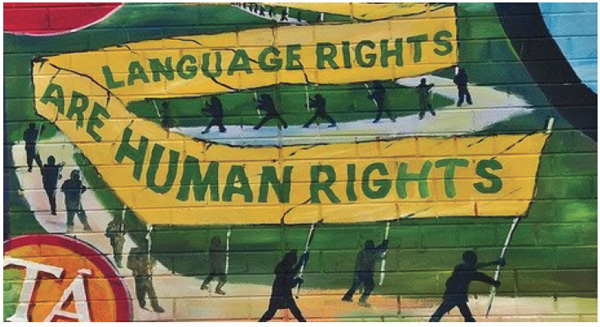
I would like to make the argument, if I can, that if we want to save Gaelic, we have to start talking more about language rights. I think that it has become very clear now that begging from year to year for more funding is not working. It is exhausting, and I would argue, for a small language revival movement with limited resources of time and energy, it is also a dead end. In contrast, I believe that a focus on winning language rights would be a far more effective and sustainable tactic for our movement because rights would give us a way to short-circuit the endless neo-liberal wrangling about funding levels. With clear language rights, we could simply demand that our rights be enforced, and it would be up to the government to find the money to fund implementation.

True, governments around the world routinely ignore statutory rights, but when they do, rights give activists clear and compelling interests to defend and multiple routes by which to defend them: they can rally around them; they can make moral arguments in their support; and critically, they can go to the courts and force governments to act.

The fact the Scottish Government has been so reluctant to create any enforceable language rights for Gaelic speakers should tell us all we need to know. The Gaelic Language (Scotland) Act 2005 passed unanimously, at least in part, because it was so weak, because it conferred no new rights. The current legislation under consideration, the Scottish Languages Bill, also contains no significant new rights, and apparently, that was by design. Politicians know that explicit language rights would give us powerful tools to force the government to spend real money on behalf of the language, and they aren’t about to give us such tools without a fight.

Successive governments of all parties have been content to allocate relatively small amounts of funding to Gaelic development, but nothing near what is required, while all governments of all parties have consistently failed to bring forward any new language rights that might drive greater spending. Specifically, for almost thirty years, Gaelic activists have been fighting for a parental right to Gaelic-medium education, and again and again, Scottish governments have simply refused meet our demands.

The Gaelic Language (Scotland) Act 2005 was itself the result of a long and impressive grass-roots campaign by Gaelic activists to ensure secure statis for the language, and a key element of that campaign was a call for a right to GME:

It is recommended that statutory provision be put in place requiring local authorities to make available Gaelic-medium school education where reasonable demand exists. It is recommended that ‘reasonable demand’ be defined to mean ‘demand made on behalf of five or more pupils’.

Comunn na Gàidhlig 1997

To activists’ great disappointment at the time, no such right was included in the act as legislated, and while GME has continued to slowly grow over the last 20 years, it is certain that provision would be far stronger now if we had a statutory right in place.

So, I would argue that there are clear tactical reasons to make our movement more about rights in the future, but I would also contend that the moral arguments are at least as compelling, particularly with regard to a right to GME. It is simply wrong that families in Glasgow, for instance, are being excluded from Gaelic education for their children. Scotland is more than wealthy enough to provide GME for any family that wants it. It is a scandal that it isn’t doing so already, but until we secure a clear, enforceable right to GME, we will keep running up against this same problem of anaemic funding and insufficient provision.

The consultation on the current draft of the Scottish Languages Bill will runs until the 8th of March. We have an opportunity now to argue for significantly strengthening the Bill before it comes before the Parliament for a vote, and I believe that we should continue to push hard for new rights in the legislation: a right to GME certainly, but  also perhaps new rights connected to the proposed areas of linguistic significance. This may be our last chance to influence legislation for Gaelic at this level for a generation, and I fear that if we don’t secure rights for Gaelic speakers now, we will spend another twenty years begging a reluctant establishment for cash for our increasingly threatened language.

Source: Comunn na Gàidhlig, Inbhe Thèarainte dhan Ghàidhlig (Inbhir Nis: Comunn na Gàidhlig, 1997)

PS: For a cool-headed and detailed discussion of the strengths and (considerable) weaknesses of the Scottish Languages Bill as it stands, check out Professor Wilson McLeod’s excellent recent article in Bella Caledonia: The Scottish Languages Bill: prospects for strengthening and challenges for implementation.

Air a phostadh ann an naidheachd | Sgrìobh beachd

Tòrr ceòl ùr Gàidhlig!

Tha mòran ceòl ùr air tighinn a-mach anns a’ Ghàidhlig o chionn greis. Chìthear a’ mheatailt dhubh aig Mòine shìos, agus seo barrachd: meatailt ùr bho Gun Ghaol. Fucan craicte.

Cuideachd, chaill mi e nuair a chur Balach an t-òran ùr seo suas, ach tha e uamhaidh roc-mhor. Dìreach sgoinneil.

Tha an stuth ùr seo a’ toirt misneachd dhomh. Tha e cho math fhaicinn. Mòran taing do Kathryn ‘Chraicte’ NicAoidh airson an toirt dham aire!

Air a phostadh ann an ceòl | Sgrìobh beachd